Nutrition Counseling for Nausea During Pregnancy: A Practical Guide for Dietitians
Aug 07, 2026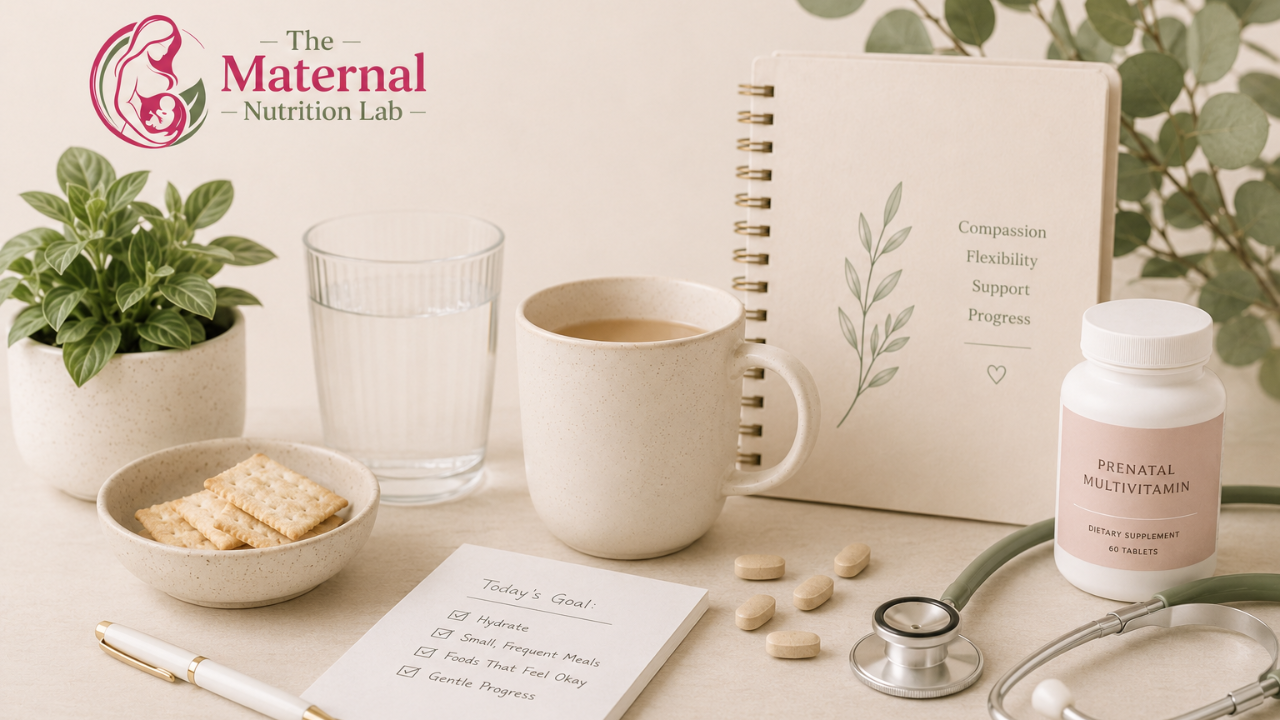
Nutrition recommendations for pregnant women can look beautifully straightforward on paper.
Adequate protein.
Iron-rich foods.
Choline.
DHA.
Fruits and vegetables.
Whole grains.
Balanced meals.
But then! A patient walks into your office and tells you that the smell of chicken makes her gag, vegetables are completely unappealing, her prenatal vitamin makes her nauseated, and the only foods she can tolerate are crackers, cereal, and toast.
Now what?
This is where maternal nutrition counseling requires more than knowing pregnancy nutrient requirements. It requires knowing when the ideal nutrition plan is no longer the most appropriate nutrition plan.
For patients experiencing significant nausea and vomiting during pregnancy, our immediate nutrition priorities may need to look very different.
Nausea During Pregnancy Can Occur at Any Time of Day
Although commonly referred to as “morning sickness,” nausea and vomiting during pregnancy can occur at any time of day.
Symptoms are particularly common in early pregnancy and can significantly affect quality of life and a patient’s ability to maintain their usual food and fluid intake. ACOG recognizes nausea and vomiting during pregnancy as a condition that can warrant treatment rather than something patients simply need to endure.
For dietitians, this matters because the nutrition assessment needs to extend beyond:
“Is this patient meeting pregnancy nutrition recommendations?”
We also need to ask:
“What is realistically tolerable right now?”
That distinction can completely change the counseling approach.
The Goal Is Not Always the “Perfect” Pregnancy Diet
A patient struggling with nausea may already feel anxious about what she is—or isn't—eating.
She may have heard that she needs to eat salmon for DHA, eggs for choline, leafy greens for folate, lean meats for iron, dairy for calcium, and plenty of vegetables.
But if she currently cannot tolerate those foods, repeatedly emphasizing what she should be eating may create additional stress without meaningfully improving her intake.
Instead, nutrition counseling can prioritize:
symptom management → hydration → adequate intake → nutrient optimization as tolerance improves.
This doesn't mean micronutrients suddenly become unimportant.
It means our counseling reflects the patient's current clinical reality.
Start With Foods the Patient Can Actually Tolerate
One of the most useful questions an RD can ask is:
“What foods sound okay to you right now?”
The answer may not resemble an ideal prenatal meal plan.
That's okay.
ACOG suggests strategies such as eating several small meals throughout the day, avoiding an empty stomach, and choosing foods that are easier for the individual patient to tolerate.
Depending on the patient, tolerable foods might include:
- crackers, toast, cereal, rice, potatoes, fruit, smoothies or other bland carbohydrate foods
- yogurt, cheese, nut butter, nuts or other protein-containing foods when tolerated
- cold foods if cooking odors trigger symptoms
- small portions eaten frequently rather than conventional meals
- liquids consumed in whatever pattern is best tolerated
Rather than immediately trying to transform those foods into perfectly balanced meals, first determine whether the patient can consistently eat and drink enough to support herself.
Optimization can come later.
Look for Opportunities to Add Nutrition Without Making Foods Less Tolerable
Once you've identified the patient's “safe” foods, you can look for low-burden opportunities to increase nutritional value.
For example, if cereal is well tolerated, could milk provide additional protein and calcium?
If toast works, would peanut butter be tolerated?
If smoothies are appealing, could yogurt or another protein source be added?
If potatoes are one of the few tolerated foods, could cheese, Greek yogurt, olive oil, or another energy-dense or nutrient-dense addition work?
The important distinction is that we're building from what the patient can eat, rather than prescribing an entirely different eating pattern.
And sometimes the answer will still be:
“No. Plain toast is all I can manage today.”
That information matters too.
Don't Forget the Prenatal Vitamin Assessment
When food variety decreases, supplementation becomes particularly relevant—but prenatal vitamins can also contribute to nausea for some patients.
Instead of simply asking whether the patient “takes a prenatal,” consider asking:
What prenatal are you taking? When do you take it? Are you able to keep it down? Does taking it worsen your nausea? What nutrients does it actually contain?
The last question is especially important because prenatal supplements are not nutritionally identical.
Choline is a good example.
The adequate intake for choline during pregnancy is 450 mg/day, yet NIH notes that fewer than half of prenatal supplements marketed in the United States contain choline, and products that do contain it often provide relatively small amounts.
So “taking a prenatal” doesn't necessarily tell us whether a patient's nutrient needs are being addressed.
This is where your supplement assessment becomes more valuable.
Be Careful Not to Over-Restrict
Pregnancy can quickly become a long list of foods patients believe they aren't allowed to eat.
Sometimes the dietitian's role isn't to add another restriction.
It's to clarify the actual recommendation.
Fish is a perfect example.
Patients may hear “avoid mercury during pregnancy” and interpret that as avoid seafood.
But FDA and EPA guidance recommends that people who are pregnant consume 8–12 ounces per week of a variety of lower-mercury fish, generally 2–3 four-ounce servings from the “Best Choices” category. Fish can provide protein, DHA/EPA, iron, iodine, choline, vitamin B12, vitamin D, selenium, and other nutrients.
Our counseling should help patients navigate food safety without unnecessarily eliminating nutritious foods.
Know When Nutrition Counseling Isn't Enough
Dietitians can help patients identify tolerable foods, improve hydration strategies, assess intake, evaluate supplements, and gradually increase dietary adequacy.
But significant nausea and vomiting may require medical management.
ACOG identifies vitamin B6 as an option that may be tried for nausea and vomiting during pregnancy, with doxylamine potentially added when B6 alone does not adequately relieve symptoms. Additional antiemetic medications may be considered when needed. Medication recommendations and management should occur in coordination with the patient's obstetric or medical provider.
Patients with persistent vomiting, inability to maintain adequate fluid intake, or other concerning symptoms warrant timely communication with their medical team.
Recognizing the limits of nutrition intervention is part of providing good nutrition care.
The Clinical Takeaway
Good prenatal nutrition counseling isn't about getting every patient to eat the textbook version of a balanced pregnancy diet.
It's about understanding what matters most right now.
For a patient eating normally, that may mean optimizing iron, choline, DHA, calcium, protein, fiber, or other nutrients.
For a patient struggling with significant nausea, it may mean helping her find three foods she can reliably tolerate and a way to maintain hydration.
Both are nutrition care.
The priorities are simply different.
Clinical Pearl: During periods of significant nausea, prioritize symptom management, hydration, and maintenance of nutritional adequacy using well-tolerated foods rather than encouraging adherence to an ideal dietary pattern.
Want More Practical Maternal Nutrition Resources?
The Maternal Nutrition Lab was created to help dietitians and healthcare professionals translate maternal nutrition recommendations into practical clinical counseling.
Download the FREE Maternal Nutrition Clinical Guide for 10 evidence-based clinical pearls you can use when counseling pregnant, postpartum, and breastfeeding patients.
References
American College of Obstetricians and Gynecologists. Morning Sickness: Nausea and Vomiting of Pregnancy.
American College of Obstetricians and Gynecologists. Nausea and Vomiting of Pregnancy. Practice Bulletin No. 189.
National Institutes of Health, Office of Dietary Supplements. Dietary Supplements and Life Stages: Pregnancy — Health Professional Fact Sheet.
U.S. Food and Drug Administration. Advice about Eating Fish.